Education | FSJ Tactical
How Bulletproof Doors Work, A Guide to Bullet Resistant Security Doors
Bullet resistant doors combine ballistic cores, reinforced frames, rated glazing, and secure hardware. FSJ Tactical explains how they work and how to retrofit the doors you already have.
A building's doors are its busiest openings, and the places attackers target first. A bullet resistant door has to stop gunfire and forced entry while still opening, closing, and locking like any other door, every day. Here's how bulletproof doors work and how FSJ Tactical can secure the doors in your building.
Bulletproof vs. Bullet Resistant Doors
"Bulletproof" implies complete protection. In reality, doors are bullet resistant, meaning they resist penetration to a tested degree based on caliber and velocity. Ratings follow UL 752, the standard for bullet-resisting equipment, from Level 1 (handgun) to Level 8 (rifle, multiple shots).
The Anatomy of a Bullet Resistant Door
A bullet resistant door is a system. Every component has to perform at the same level, or the weakest part becomes the way in.
Ballistic Core
Fiberglass composite or steel layers inside the door stop and capture the bullet. Composite cores are non-ricocheting and lighter than steel. DefenseLite doors offer UL 752 Level 1–8 cores.
Reinforced Frame
The frame is built to the same rating as the door so bullets can't pass around it and attackers can't pry the door out.
Bullet-Resistant Vision Lite
Any glass in the door is replaced with rated glazing, such as polycarbonate or glass-clad polycarbonate.
Secure Hardware
Heavy-duty hinges, locks, and strikes resist kicking and prying. DefenseLite doors work with any handle or locking system, with low-voltage options.
How a Door Stops a Bullet
When a round hits a ballistic core, the hard layers deform and slow the bullet while tough composite layers absorb the remaining energy and trap the fragments. Fiberglass composites capture the bullet rather than deflecting it, reducing ricochet danger. The door face hides all of this, so it looks like an ordinary wood, veneer, metal, or laminate door.
Forced-Entry Resistance
Bullet-resistant doors are also much harder to kick or pry open than standard doors. They're built to withstand repeated blows from hammers, crowbars, and other tools, which buys time for occupants to shelter and for police to respond.
Two Ways to Secure Your Doors
| Approach | How It Works | Best For |
|---|---|---|
| AccessShield re-glazing | Patented extrusion retrofits existing commercial door lites with 0.25"–1.25" polycarbonate or glass-clad shields; UL 752 Levels 1, 2, 3, 6 | Aluminum storefront and entry doors in good condition |
| DefenseLite bullet-resistant doors | Complete door and frame with UL 752 Level 1–8 core; wood, veneer, metal or PLAM | Classrooms, offices, safe rooms, back entrances, and higher threat levels |
Where Bullet Resistant Doors Are Used
- Entry and exit points: main entrances, back entrances, loading docks
- High-risk interior areas: server rooms, control centers, cash rooms, reception areas in government buildings, security checkpoints
- Shelter spaces: classrooms, offices, and conference rooms that double as SafeSuite safe rooms
- Specialty facilities: courthouses, police stations, banks, stadiums, and correctional facilities
Choosing the Right Door
Consider the threat level (which UL 752 level you need), whether the door is interior or exterior, how it must look, what hardware and access control it needs, and whether the existing frame can be retrofit. FSJ Tactical walks through each opening during a site assessment and recommends the right combination of doors and security glazing.
Secure every door in your building. Contact FSJ Tactical for an assessment of your entries, classrooms, and secure areas.
Security Film + Glazing
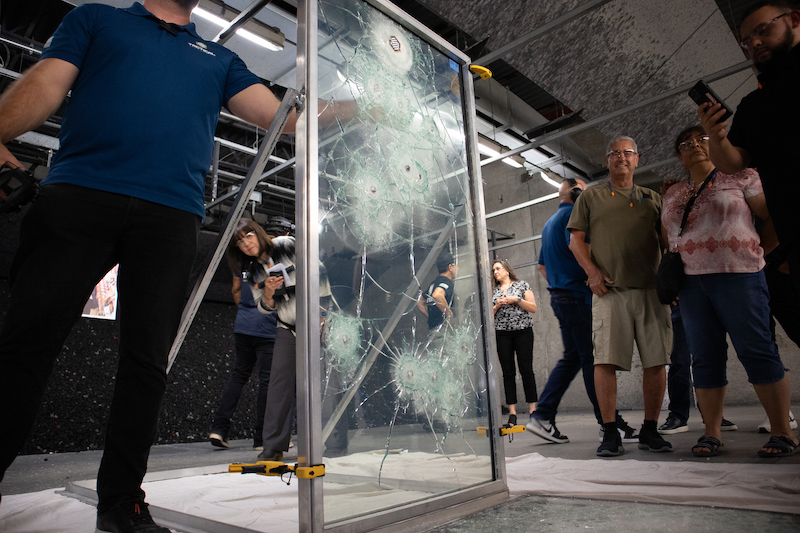
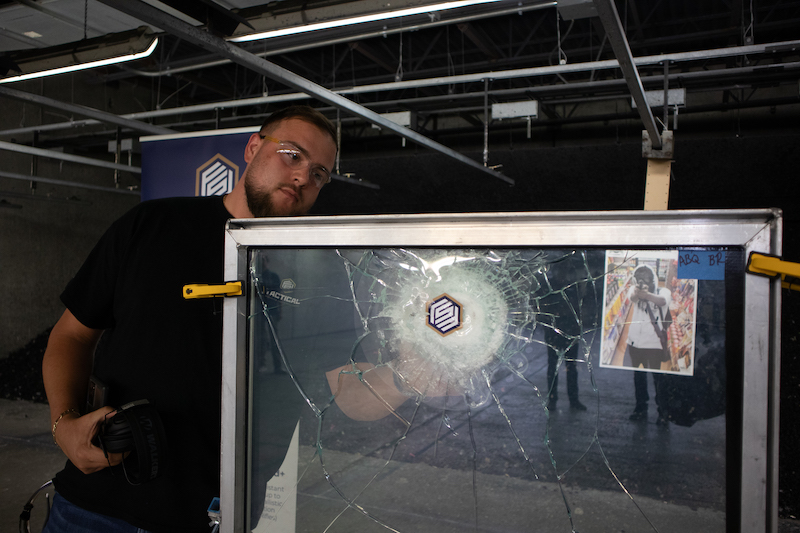
See It Stop a Threat: FSJ Tactical Live Fire Demos
Request a live fire demonstration of our products on any existing drywall or glass.
Peace of Mind: Installed
Recent FSJ Tactical projects for school districts, cities, and counties. Over 500,000 square feet protected.


Installation available in every state
NATURAL DISASTERS
Security film and polycarbonate glazing hold glass in place against storms, debris, and blasts.
CRIME
Forced-entry and ballistic protection delays attackers and buys time for law enforcement to respond.
PEACE OF MIND
FSJ Tactical protects occupants and assets with an industry-leading warranty and nationwide installation.
Frequently Asked Questions
Are bulletproof doors really bulletproof?
They're bullet resistant. "Bulletproof" implies complete protection, while bullet resistant means the door resists penetration to a tested level based on caliber and velocity, as rated under UL 752.
What are bulletproof doors made of?
Bullet-resistant doors use ballistic cores such as fiberglass composites or steel, inside a door face of wood, veneer, metal, or PLAM. Vision lites use bullet-resistant glazing, and frames are reinforced to match the door's rating.
Do bulletproof doors look different from regular doors?
Not necessarily. DefenseLite bullet-resistant doors are available in slab, flat-panel, raised-panel, vision, and custom styles, including barn doors and historical replication, so they can match existing architecture.
Can I make my existing glass door bullet resistant?
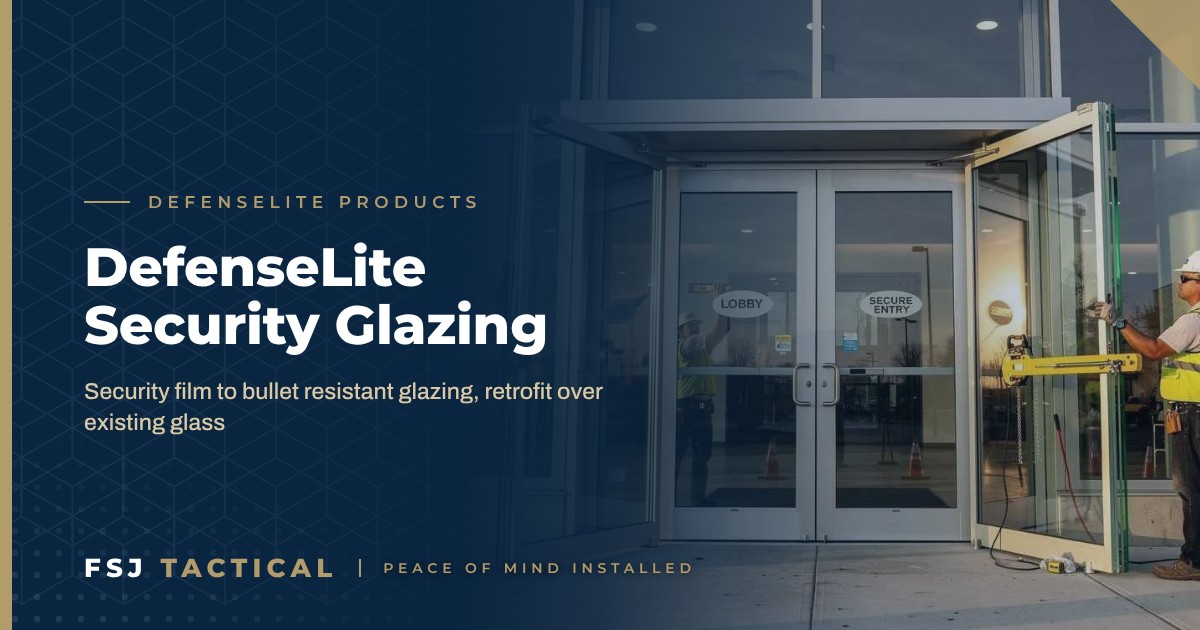
Often, yes. AccessShield re-glazes the lites in most standard commercial aluminum doors with polycarbonate or glass-clad shields from 0.25" to 1.25", with UL 752 Levels 1, 2, 3 and 6 available.
Are bulletproof doors heavy?
Weight depends on the ballistic level and materials. Fiberglass composite cores weigh about 25% less than steel, which makes modern bullet-resistant doors easier to operate.
Let's talk about your project...
Talk with the FSJ Tactical team about a site assessment. We'll walk your building, identify the glass and doors at highest risk, and recommend the DefenseLite security glazing level that fits your threats and your budget.