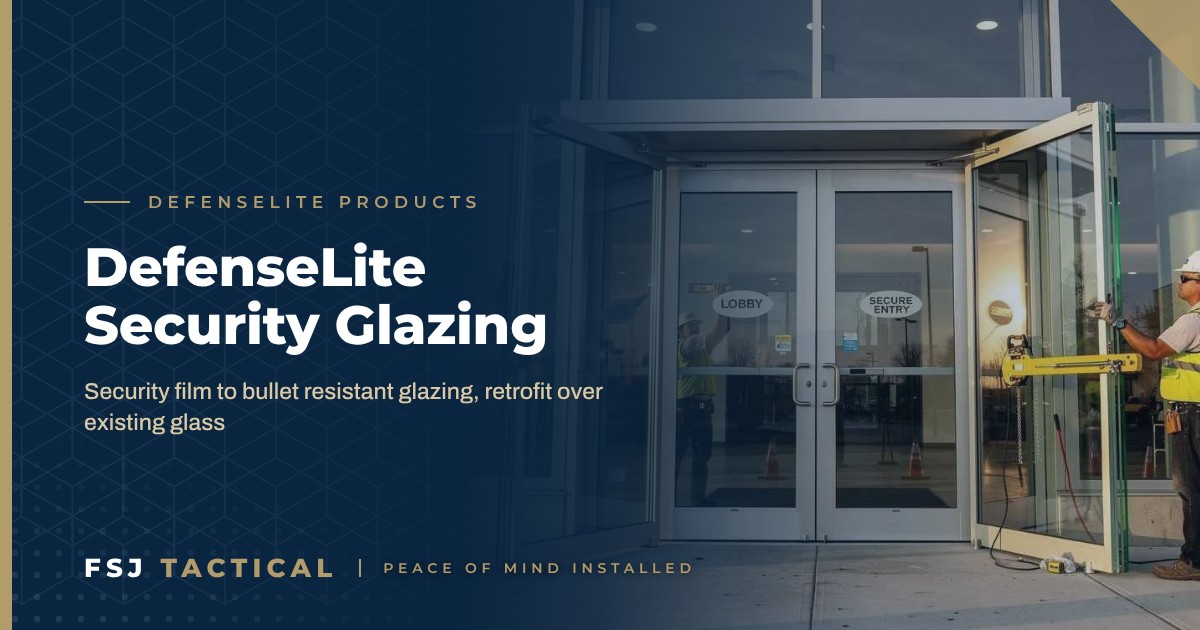
Security Glazing Levels | FSJ Tactical
Levels of Security Glazing, From Security Film to Bullet Resistant Glass
Choose a glazing retrofit level to fit your building and budget. FSJ Tactical explains the four DefenseLite security levels, what each one stops, and the testing behind it.
Glass is a building's weakest link. Bad actors see it as an easy entry point. Security glazing solves that by integrating into the existing building to delay, stop, and prevent disaster. But not every threat requires the same solution. Here's how the four DefenseLite security glazing levels compare, so you can choose the right protection for every opening.
The Four Levels of Security Glazing
| Level | Threat | Mitigation | Product | Testing & Features |
|---|---|---|---|---|
| I | Low | Delayed entry; slow smash-and-grab | RiotLite security film | Minimum recommendation; 8 mil minimum with attachment (36–41 mil options); ASTM F3561 Level 3 (system test) and F588 |
| II | Moderate | Access denial; anti-graffiti; prevent smash-and-grab | DefenseLite polycarbonate shield | 1/4" polycarbonate shield mounted to exterior framing; anti-graffiti sacrificial layer; STC 41, OITC 33 |
| III | Moderate to high | Access denial; active shooter; hurricane; blast; prevent smash-and-grab | DefenseLite Pro | ASTM F3561 Level 8 (system test) and F588; ASTM F1233 Class 2.4; ASTM E1886/E1996 Miami-Dade zone 5; ASTM F1642 Class 10 psi / 90 psi-msec; 5-aa1 active-shooter test |
| IV | High | All of Level III plus ballistic protection | BulletShield | ASTM F1233; ASTM E1886/E1996 Miami-Dade zone 5; ASTM F1642; 5-aa1 test; UL 752 ballistic levels |
Level I: Delayed Entry
RiotLite security film is the minimum recommendation for security glazing. Applied to existing glass and mechanically attached to the frame, it holds broken glass together and slows down smash-and-grab and vandalism. It's an economical way to cover many windows and is typically used for lower-risk openings and interior glass.
Level II: Access Denial
The DefenseLite polycarbonate shield is a 1/4" shield mounted to exterior framing over the existing glass. It flexes and absorbs impact instead of shattering, so attackers can't get through even after the glass behind it breaks. An anti-graffiti sacrificial layer protects the surface, and the system provides strong acoustic performance (STC 41 / OITC 33).
Level III: Prevent Forced Entry
DefenseLite Pro uses heavier polycarbonate and extrusions about twice as thick. It's tested to ASTM F3561 Level 8, the highest level of that standard, along with hurricane, blast, and active-shooter criteria. Choose Level III for primary entries, storefronts, and any opening where you need to stop a determined attacker.
Level IV: Ballistic Protection
BulletShield adds UL 752-rated ballistic protection to everything Level III provides. It's available in polycarbonate and glass-clad configurations and is the recommended choice for main entries and lobbies where active-shooter risk is a primary concern. Learn how bulletproof glass works.
Why System Testing Matters
Component testing evaluates individual materials in isolation. System testing evaluates the fully installed product, including frames, fasteners, connections, and installation methods, under real-world conditions. A component can perform well on its own and behave differently once combined with frames and adjacent materials. Both RiotLite and DefenseLite Pro were tested as complete systems, so tested performance reflects what you'll get in the field.
Determining the Best Solution
Which level is right for each application? It starts with understanding current risk factors, which requires evaluating every part of the building's elevations because the threat may vary from side to side. A qualified security glazing professional who offers multiple solutions can perform a threat assessment that often results in more than one recommendation, for the most effective and economical approach.
The system manufacturer should also factor in local climate to prevent long-term moisture and condensation. A vented overmount system eliminates moisture in the void between the shield and the glass, minimizing the pillowing and distortion common in rigid, non-vented overglaze systems. Every DefenseLite overlay is vented. See how FSJ Tactical applies these levels using the Zones of Defense.
Find the right level for every opening. FSJ Tactical is a turnkey partner: we assess, recommend, and install security glazing nationwide. Contact us to get started.
Security Film + Glazing
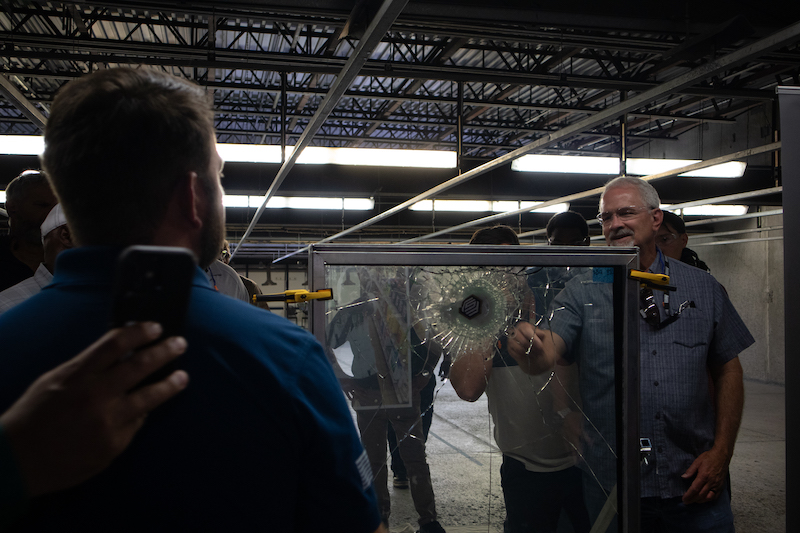
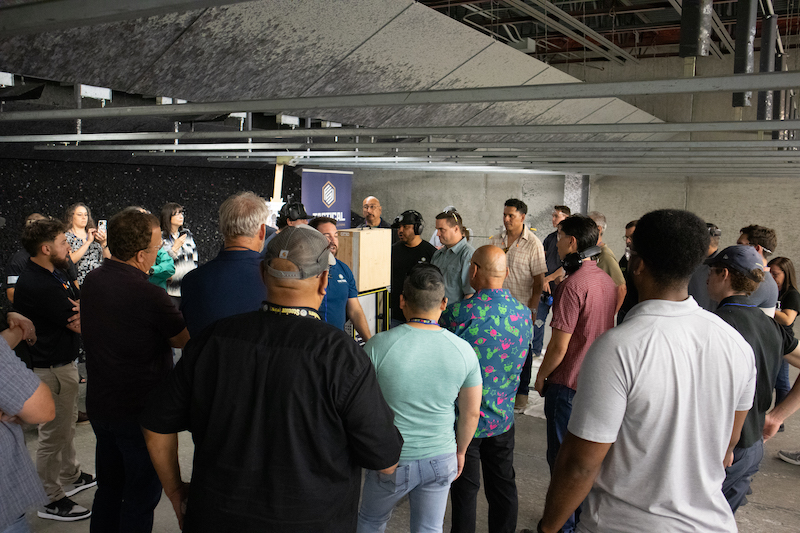
See It Stop a Threat: FSJ Tactical Live Fire Demos
Request a live fire demonstration of our products on any existing drywall or glass.

Peace of Mind: Installed
Recent FSJ Tactical projects for school districts, cities, and counties. Over 500,000 square feet protected.


Installation available in every state
NATURAL DISASTERS
Security film and polycarbonate glazing hold glass in place against storms, debris, and blasts.
CRIME
Forced-entry and ballistic protection delays attackers and buys time for law enforcement to respond.
PEACE OF MIND
FSJ Tactical protects occupants and assets with an industry-leading warranty and nationwide installation.
Frequently Asked Questions
What are the levels of security glazing?
DefenseLite organizes protection into four levels: Level I RiotLite security film (delayed entry), Level II DefenseLite polycarbonate shield (access denial), Level III DefenseLite Pro (prevent forced entry, plus active shooter, hurricane, and blast testing), and Level IV BulletShield (adds UL 752 ballistic protection).
What is ASTM F3561?
ASTM F3561 is a standard test method for forced-entry resistance of fenestration systems after a simulated active-shooter attack. It rates systems across Levels 1 through 8, with Level 8 being the most demanding. RiotLite is tested to Level 3 and DefenseLite Pro to Level 8.
What is UL 752?
UL 752 is the standard for bullet-resisting equipment. It rates materials by the caliber and number of shots they stop, from handgun levels through high-powered rifle levels. BulletShield, DefenseLite bullet-resistant doors, wall panels, and transaction windows carry UL 752 ratings.
Which level does my building need?
It depends on your threats, which can vary from one elevation to another. Most buildings use more than one level. A qualified assessment from FSJ Tactical will map each opening to the right level.
Let's talk about your project...
Talk with the FSJ Tactical team about a site assessment. We'll walk your building, identify the glass and doors at highest risk, and recommend the DefenseLite security glazing level that fits your threats and your budget.